
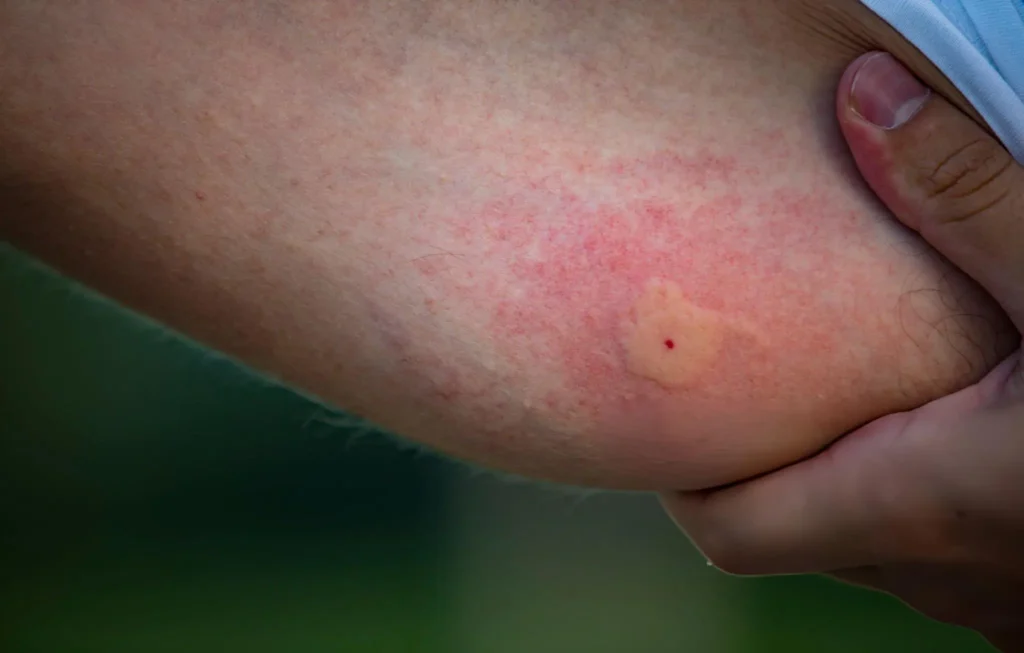
Insect bites are common, especially when gardening, camping or working outdoors in the Clarence Town area. Most cause itching, redness or mild swelling and settle within a few days. Some reactions need attention, though, particularly if symptoms worsen or signs of infection develop.
This guide explains how to recognise common bites, manage mild reactions at home, and understand when a GP assessment may be appropriate.
Key Takeaways
- Most insect bites cause local itching or swelling and improve within days
- Mosquito, flea, bed bug and ant bites can look similar
- Photos and bite patterns are clues, not a diagnosis
- Mild bites often settle with simple first aid, but worsening or infected bites need assessment
- Severe allergic symptoms are an emergency: call Triple Zero (000)
What Are the Common Symptoms of Insect Bites?
Insect bites commonly cause itchy, raised bumps. They may appear red or pink on lighter skin, while affected areas may appear darker or purple on darker skin. You or your child may notice:
- Itching
- Redness or discolouration
- Localised swelling
- Raised bumps or welts
- Pain or burning after some stings
- Occasional blistering
A large swollen reaction does not automatically mean the bite is infected. Local inflammation can cause considerable swelling without a bacterial infection.
What Are the Common Types of Insect Bites?
Several insects cause bites and stings in Australia, and the marks can look alike. Patterns are clues only and cannot reliably identify the cause.
| Bite or sting | Possible clues |
| Mosquito | Itchy raised bumps on exposed skin |
| Bed bug | Itchy marks noticed after sleeping; signs in bedding |
| Flea | Very itchy marks on feet or lower legs; pet exposure |
| Ant | Local itching, pain, redness or swelling |
| Bee or wasp | Sharp pain straight away with local swelling |
Mosquito Bites
Mozzie bites typically cause itchy, raised bumps on exposed skin. Swelling varies between people, and a large reaction does not automatically mean infection.
Bed Bug Bites: What Do They Look Like?
Bed bug bites often appear as itchy marks noticed after sleeping, sometimes in groups. No pattern confirms bed bugs, though. Bed bugs may hide in mattress seams and nearby furniture. Live insects, shed skins, blood spots, or dark spots from droppings on bedding may provide further clues to an infestation.
Flea Bites: Common Signs and Symptoms
Flea bites cause intense itching and small swollen marks, often on the feet and lower legs. Cats, dogs and carpets can be sources, so treating the source matters when bites keep returning.
Ant Bites, Bee Stings and Wasp Stings
Ant bites or stings may cause itching, pain and local swelling, while bee and wasp stings often cause immediate sharp pain. A visible bee sting should be removed promptly. Ticks and spiders are not insects and need different first aid, so seek separate advice if either is suspected.
Can You Identify Insect Bites From Pictures?
Pictures can help you compare common appearances, but skin reactions overlap, and a photo alone rarely confirms the cause. Redness also looks different across skin tones. If you are unsure what a mark is, a GP can examine the skin.
How Can You Treat an Insect Bite at Home?
For a mild bite, wash the area and cool it. Then:
- Gently clean the skin with soap and water.
- Hold a cold pack wrapped in cloth on the area to ease swelling and discomfort.
- Try not to scratch, as broken skin can become infected.
- Ask a pharmacist whether an antihistamine or topical treatment suits your age and circumstances, particularly for children.
- Watch whether the bite settles or worsens over the next few days.
This advice does not apply to suspected dangerous spider bites or attached ticks.
When Should You See a GP for an Insect Bite?
Consider a GP appointment if a bite:
- Becomes more painful, tender or warm
- Has redness that keeps spreading
- Has pus or discharge
- Comes with fever or feeling unwell
- Is not improving after several days
Seek urgent medical assessment if pain, redness or swelling is spreading rapidly, or if you have a fever and are becoming increasingly unwell. Do not wait for a routine GP appointment when symptoms are worsening quickly.
An infected insect bite may become increasingly painful, warm or tender, sometimes with spreading redness or discharge. A GP can examine the skin, consider other possible causes and advise whether treatment, including antibiotics, is appropriate. Itching or swelling alone does not mean antibiotics are needed.
If a bite is becoming more painful or swollen, or is not improving, a general medicine appointment can help you work out the next step.
When Can an Insect Bite or Sting Be an Emergency?
Call Triple Zero (000) immediately if someone develops signs of anaphylaxis (a severe allergic reaction), including:
- Difficulty or noisy breathing, wheezing or persistent coughing
- Tongue or throat swelling, or difficulty talking
- Persistent dizziness or collapse
- A young child becoming pale and floppy
- Abdominal pain or vomiting following an insect sting
If anaphylaxis is suspected, lay the person flat and give adrenaline immediately using an available device. Call 000. Do not allow them to stand or walk. If breathing is difficult, they may sit with their legs outstretched. Hold young children flat, not upright. If the person is unconscious, place them on their side. Follow their ASCIA Action Plan if available.
What Should Parents Know About Insect Bites in Children?
Children may develop noticeable swelling after insect bites and may scratch the affected skin. The suitability of antihistamines and medicated creams depends on age, so ask a pharmacist or GP before using them.
Seek prompt medical assessment if an infant under 12 months is unusually distressed and cannot be soothed after a suspected bite or sting, if a bite or sting affects the mouth, throat or area near the eyes, or if a child becomes increasingly unwell. Parents can discuss persistent or worsening bites through our children’s health services.
How Can You Reduce Insect Bites Outdoors and at Home?
- Use insect repellent as directed on the label
- Wear long sleeves and protective clothing outdoors
- Fit window and door screens
- Remove standing water around the home
- Check pets and bedding if fleas or bed bugs are suspected
For infestations, pest-control advice can help.
FAQs
How long do insect bites usually last?
Many mild reactions improve within a few days, although healing time varies from person to person.
How can I tell if an insect bite is infected?
Increasing pain, warmth, spreading redness or discharge can be signs of infection, unlike ordinary itch or swelling.
Why is my insect bite still swollen after a few days?
Some insect bites cause local swelling that lasts several days. If swelling continues to worsen or is accompanied by increasing pain, spreading redness or fever, seek medical assessment.
Can you identify an insect bite from a photo?
A photo is a useful clue, but not a definite identification or diagnosis.
Getting an Insect Bite Checked
If an insect bite affecting you or your child is worsening, appears infected or is not improving, you can book a GP appointment with Clarence Town Healthcare to discuss the symptoms and appropriate next steps.